Murder At The Mushaira (Raza Mir) - Ordinary People Extraordinary Times
An eminently readable book, written in the backdrop of the First War of Indian Independence, this is the first of its kind that I have read in this genre, that is set in India. The author weaves together the simple lives of the characters with the tumultuous changes in the backdrop. I have a fondness for stories such as this, that tell us about the lives of ordinary people weaved in with a significant historical event.
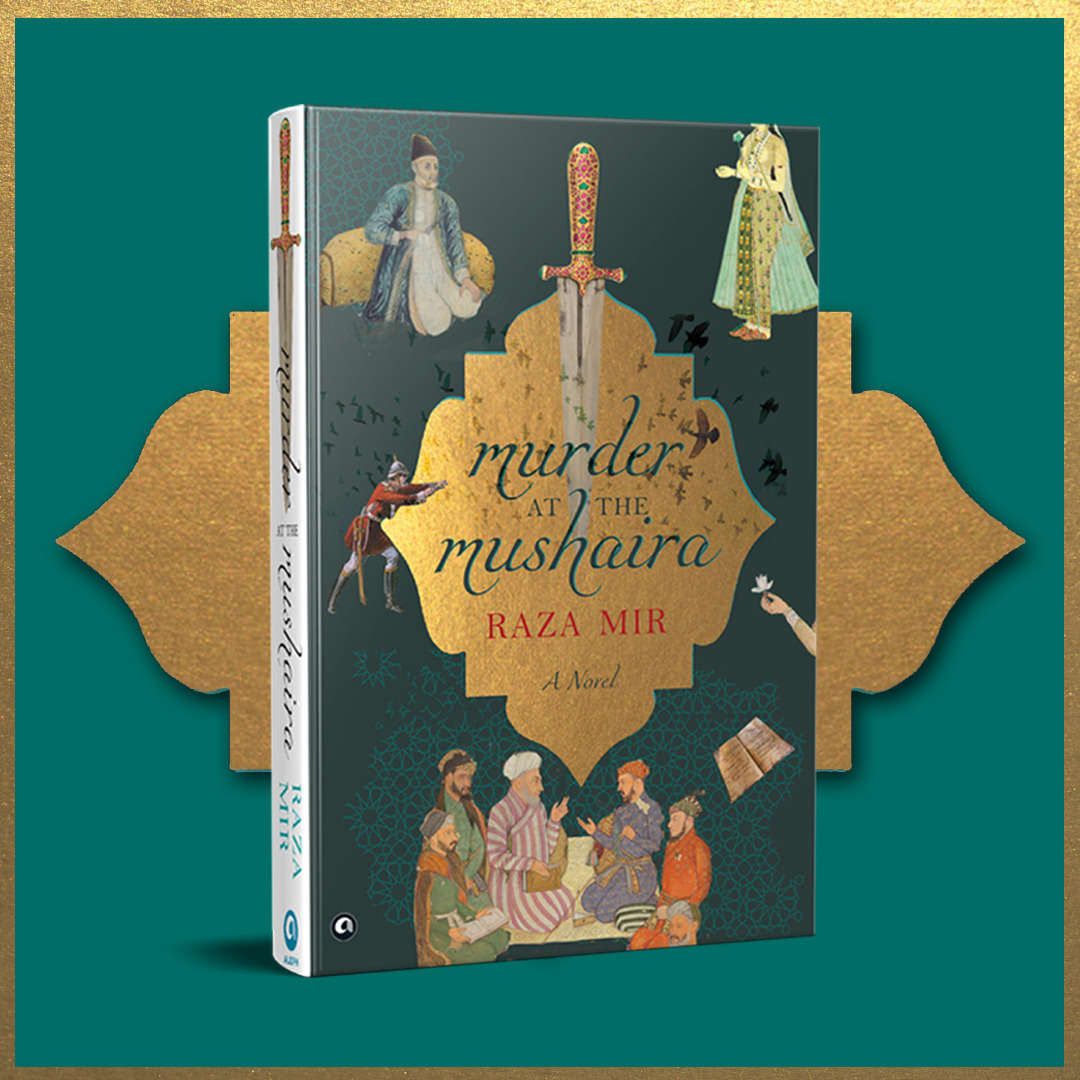
The murder the title refers to, takes place pretty much in the beginning of the book. The famous poet Mirza Ghalib is introduced to us as an amateur detective and along with spouting beautiful poetry, he has the ability to understand the motivations of his fellow men that help him solve petty crimes. This time, he is called on to give his expertise in the rather unpleasant murder of a fellow poet. As he unravels the mystery, he realizes that this is far more than just a murder - it is a revolution in the making and if he doesn't play his part properly, it can all come undone. Along with Chain Sukh (love the oxy-moron here - intelligently constructed between two words of different languages!) , the young policeman of Chandni Chowk thana and Ramachandra, the gay (ahem!) professor with a scientific temperament and a keen interest in forensics, Mirza Ghalib must ensure that the murderer is caught but also that the key conspirators are not identified by the British and the revolution is brought to fruition.
The back stories of each character is evocative of the pain that each has gone through irrespective of their station in life, the forever tussle between what is desirable and what is acceptable, the simple joys that give their lives meaning and the insignificant role they understand they have to play, for the bigger cause to succeed. The relationship between Ghalib and Umrao is beautiful - "when we have only two mangoes left, she leaves the sweeter looking one for me". The love between Roshan Ara Begum and Ghalib is evocative of pain - "A realized expectation becomes banal, but desire unconsummated gives life colour and heft."
The back stories of each character is evocative of the pain that each has gone through irrespective of their station in life, the forever tussle between what is desirable and what is acceptable, the simple joys that give their lives meaning and the insignificant role they understand they have to play, for the bigger cause to succeed. The relationship between Ghalib and Umrao is beautiful - "when we have only two mangoes left, she leaves the sweeter looking one for me". The love between Roshan Ara Begum and Ghalib is evocative of pain - "A realized expectation becomes banal, but desire unconsummated gives life colour and heft."
One thing that stands out for me is the key role played by female characters in a plot of mystery, intrigue and revolution - whether it is Hyderi the artist who paints Mughal miniatures, Roshan Ara Begum who lives in luxury but keenly aware of what she never had, Zainab the young, fearless one, Umrao the devoted wife with a razor sharp mind and a tongue to match it, Ratna the singer and dancer, Ishrat Bee the maid in the haveli or Mirza's two young precocious grand daughters - each female character is strong, speaks her mind and plays a pivotal role. To have that in a story depicting a period where women were to be neither seen nor heard, is an achievement in itself.
Though the story does have many characters and sub plots, it never goes too far away from the main plot. The city of Delhi and in particular Chandni Chowk, are characters in their own right, described through the eyes and words of an Indian author, one who understands the sense and sensibilities of India and its culture (unlike for eg some of William Darlymple's references in City of Djinns). The use of an appropriate Urdu couplet (sher) at the beginning of each chapter is beautiful and appropriate.
If you are looking for a book that packs in mystery, history, poetry, love and emotions - pick this one up. You wont regret it.

Comments
Post a Comment